Air filters play an important role in maintaining clean air, protecting HVAC equipment, and supporting efficient operations in commercial and industrial facilities. However, even a high-quality filter cannot work effectively forever.
As a filter collects dust, dirt, and airborne particles, its resistance to airflow can increase. A heavily loaded filter may reduce system performance and affect indoor air quality.
So, how often should HVAC and industrial air filters be replaced?
The answer depends on several factors, including the type of filter, operating hours, dust levels, airflow requirements, industry, and the conditions in which the filtration system operates.
Why Regular Air Filter Replacement Is Important
Regular inspection and timely replacement of air filters are essential for maintaining an effective filtration system.
A dirty or overloaded filter can affect:
- Airflow
- HVAC system efficiency
- Indoor air quality
- Equipment performance
- Energy consumption
- Maintenance requirements
- Overall filtration effectiveness
For manufacturing facilities, the importance can be even greater because industrial environments may contain higher concentrations of dust, particles and other airborne contaminants.
How Often Should HVAC Filters Be Replaced?
There is no single replacement schedule that applies to every HVAC system.
As a general maintenance starting point, filters should be inspected regularly and replaced according to their condition, manufacturer's specifications and system requirements.
The replacement frequency can vary significantly depending on the application.
Pre-Filters
Pre-filters are normally the first filtration stage and capture larger particles before air reaches finer filters.
In dusty environments, pre-filters may become loaded relatively quickly and may require more frequent inspection and replacement.
Panel Filters
Panel filters are commonly used in HVAC and air-handling applications.
Their service life depends on the amount of dust entering the system, operating hours, airflow and filter specification.
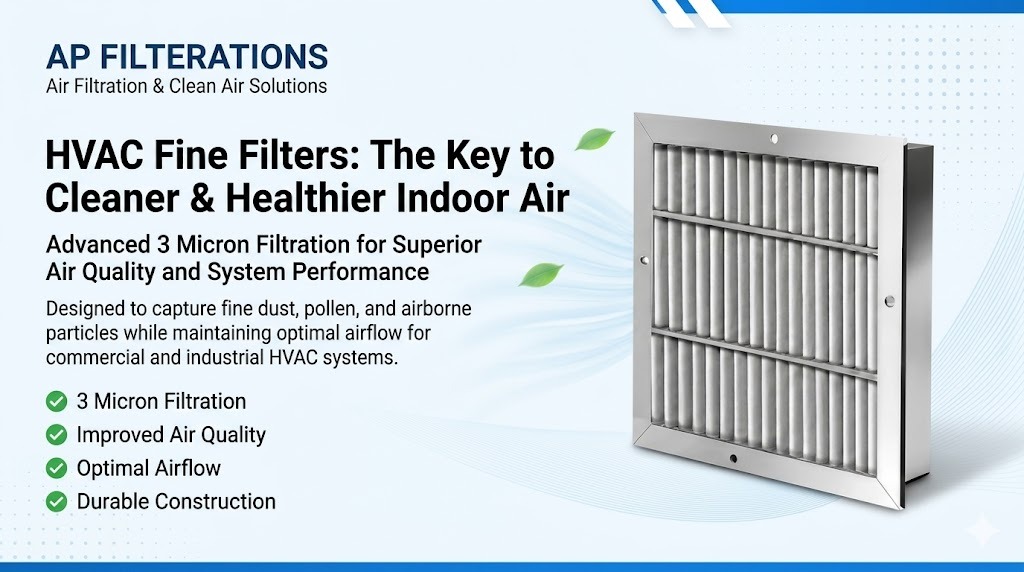
Fine Filters
Fine filters capture smaller airborne particles than basic pre-filters.
Because they are often used as a secondary filtration stage, their replacement interval can depend heavily on the performance of the upstream pre-filter.
A properly maintained pre-filter can help reduce the particle load reaching the fine filter.
HEPA Filters
HEPA filters are used in applications requiring high-efficiency particle filtration.
Their replacement should not be based simply on a fixed number of months or years. The actual service life can depend on airflow, particle loading, pressure drop, operating conditions and the requirements of the facility.
For critical applications such as pharmaceutical manufacturing and clean rooms, filter condition should be monitored according to the facility's filtration and maintenance procedures.
What Factors Affect Filter Replacement Frequency?
Several factors determine how quickly an air filter becomes loaded.
1. Dust and Pollution Levels
Facilities located in dusty environments may require more frequent filter replacement.
Manufacturing processes can also generate dust and particles that increase the loading rate of filters.
2. Operating Hours
An HVAC system operating continuously will generally put more load on its filters than a system operating only a few hours per day.
Production facilities running multiple shifts should therefore pay close attention to filter condition.
3. Type of Industry
Different industries have different filtration requirements.
For example:
- Pharmaceutical manufacturing may require high-efficiency filtration.
- Food processing may require controlled and hygienic environments.
- Electronics manufacturing can require protection from airborne particles.
- General manufacturing may require dust and particulate control.
- Commercial buildings may primarily focus on indoor air quality and HVAC performance.
4. Filter Type
Pre-filters, panel filters, fine filters and HEPA filters have different designs and filtration characteristics.
Therefore, their service intervals can be different.
5. Airflow
Changes in airflow can be an indication that a filter is becoming restricted.
A heavily loaded filter can increase resistance to airflow and place additional demand on the HVAC system.
6. Pressure Drop
Pressure drop is an important indicator when evaluating filter condition.
As particles accumulate on a filter, resistance can increase. Monitoring pressure drop can therefore help facility managers determine when maintenance or replacement may be required.
7. Temperature and Humidity
Operating conditions such as humidity and temperature can influence filter performance and service life depending on the filter material and application.
Signs That an Air Filter Needs Replacement
Instead of relying only on a calendar-based schedule, facility managers should monitor the actual condition and performance of the filtration system.
Some common signs include:
Visible Dirt and Dust
A visibly loaded filter may require inspection and replacement.
Reduced Airflow
If airflow decreases, the filter should be checked along with other possible causes of restricted airflow.
Increased Pressure Drop
An increase in pressure drop across the filter can indicate increasing particle loading.
Poor Indoor Air Quality
If dust or airborne particles are increasing in the facility, the filtration system should be inspected.
HVAC Performance Issues
A heavily loaded filter can contribute to reduced HVAC performance and increased system strain.
Frequent Maintenance Problems
If filters are becoming dirty much faster than expected, the facility may need to review its filtration stages, airflow requirements and filter specifications.
How a Multi-Stage Filtration System Can Help
Many industrial and commercial filtration systems use multiple stages.
A typical arrangement may include:
Pre-Filter → Fine Filter → HEPA Filter
The pre-filter captures larger particles first.
The fine filter provides additional particle filtration.
The HEPA filter provides high-efficiency filtration for applications that require a higher level of airborne particle control.
This approach can help distribute the filtration load across multiple stages and protect downstream filters.
How to Extend the Life of HVAC and Industrial Filters
Proper system maintenance can help improve filter performance and potentially extend service life.
Maintain Pre-Filters
Regularly inspect the first filtration stage. A properly maintained pre-filter can reduce the particle load reaching downstream filters.
Monitor Pressure Drop
Where appropriate, use pressure-drop monitoring to understand filter loading instead of replacing filters blindly according to a fixed calendar.
Keep HVAC Components Clean
Dust accumulation in surrounding HVAC components can affect system performance. Regular inspection and maintenance should be part of the overall HVAC maintenance program.
Use the Correct Filter Specification
Installing the wrong filter can negatively affect airflow, efficiency and filtration performance.
Filter selection should consider the HVAC system, required airflow, dimensions, efficiency and operating environment.
Follow Manufacturer Recommendations
Always consider the filter manufacturer's specifications and the requirements of the specific HVAC or industrial application.
Why Filter Selection Matters
Choosing an air filter is not simply about selecting the highest filtration efficiency available.
A filter must be suitable for the system's:
- Airflow requirements
- Filter dimensions
- Particle loading
- Pressure-drop limitations
- Operating conditions
- Required filtration efficiency
- Maintenance schedule
For industrial facilities, selecting the appropriate combination of pre-filters, fine filters and high-efficiency filters can be an important part of an effective air filtration strategy.
HVAC and Industrial Air Filters for Different Industries
Air filtration requirements can vary significantly between industries.
Pharmaceutical Industry
Pharmaceutical manufacturing may require highly controlled environments and high-efficiency filtration systems.
Healthcare
Healthcare facilities may require specialized filtration solutions depending on the application and air-quality requirements.
Food Processing
Food manufacturing and processing facilities may require filtration solutions that support hygienic production environments.
Electronics
Electronics manufacturing can require effective control of airborne particles because sensitive components may be affected by contamination.
General Manufacturing
Industrial manufacturing facilities can use different combinations of pre-filters, fine filters and high-efficiency filtration depending on the production process.
When Should You Replace Your Air Filter?
The safest approach is to combine regular inspection with performance monitoring rather than following one universal replacement period.
Consider replacing a filter when:
- It is visibly loaded with dust.
- Pressure drop has reached the applicable limit.
- Airflow has been significantly affected.
- Filtration performance is no longer suitable.
- The manufacturer's recommended service limit has been reached.
- The filter has been damaged or compromised.
For critical industrial applications, replacement intervals should be determined according to the specific system design, operating conditions and maintenance procedures.
Choose the Right Industrial Air Filtration Solution
The right air filtration solution can make an important difference in maintaining controlled and efficient industrial environments.
AP Filterations provides filtration solutions for industrial and commercial applications, including products and solutions related to HVAC and high-efficiency air filtration. The company also serves industries including manufacturing, pharmaceutical, healthcare, food and electronics.
When selecting filters for your facility, consider not only the replacement interval but also the complete filtration system, including filter efficiency, airflow, pressure drop, filter construction and operating conditions.
Conclusion
There is no universal answer to how often HVAC and industrial air filters should be replaced.
Filter replacement frequency depends on the type of filter, dust levels, operating hours, industry, airflow, pressure drop and environmental conditions.
Regular inspection and appropriate maintenance can help ensure that your filtration system continues to perform effectively.
For manufacturing and industrial facilities, a properly designed combination of pre-filters, fine filters and HEPA filtration can provide an effective approach to controlling airborne particles and maintaining cleaner air.
If you need help selecting the appropriate HVAC filters or industrial air filtration solutions, consult a professional filtration manufacturer and select a solution based on your specific application requirements.
Frequently Asked Questions
How often should HVAC filters be changed?
There is no fixed interval for every HVAC system. Filters should be inspected regularly and replaced based on their condition, pressure drop, operating conditions and manufacturer's recommendations.
How often should industrial air filters be replaced?
Industrial filter replacement depends on dust loading, operating hours, filter type, airflow and the specific manufacturing process.
How do I know if my air filter is dirty?
Visible dust accumulation, reduced airflow and increased pressure drop can indicate that a filter requires inspection.
Do HEPA filters need frequent replacement?
Not necessarily. HEPA filter life depends on particle loading, airflow, operating conditions and the application's requirements. Monitoring filter condition is more reliable than using one universal replacement schedule.